How to Start a Meditation Practice for Beginners
You’ve probably been thinking about meditation for a while. Maybe you’ve heard it can help with stress, sleep, or that constant noise in your head. Maybe you’ve watched a video or downloaded an app, only to sit there wondering if you’re even doing it right.
Here’s the truth. You don’t need to know how to meditate to start meditating. You don’t need to be spiritual. You don’t need to sit cross legged on the floor. You don’t need to clear your mind completely. And you certainly don’t need to become a different person.
After teaching meditation and mindfulness in Redditch and Barnt Green for several years, I’ve found that beginners rarely struggle because meditation is hard. They struggle because they’ve overcomplicated it before they’ve even started.
The First Thing I Tell Every Beginner
When someone comes to one of my sessions and says, “I’d love to meditate, but I don’t know where to start,” my answer is always the same.
Don’t worry about that.
Being curious is enough. I’ll guide you the rest of the way.
Meditation is simply giving yourself permission to sit down and be still, often for the first time in years. Your mind will tell you that you’re too busy. It will remind you of your to-do list. It will suddenly find ten other things you should be doing instead.
That’s completely normal. It doesn’t mean you’re bad at meditation. It means you’re human, and your mind has never been asked to sit quietly before.
Know Your Reason Why
Before you start, it helps to get clear on why you want to meditate in the first place. Most people don’t come to meditation because it sounds fun. They come because something isn’t working. They’re stressed, anxious, exhausted, struggling to sleep, or overwhelmed by their own thoughts.
Ask yourself:
- What am I hoping meditation will help me with?
- How do I want to feel?
- What would change in my life if I felt calmer and more in control?
Write your answer down somewhere you’ll see it. Motivation will dip from time to time, and when it does, your reason why is what brings you back.
The Biggest Mistakes Beginners Make
After teaching hundreds of beginners, I see the same handful of mistakes come up again and again.
- Treating meditation as something to fit in “when there’s time” rather than a priority. Life gets busy and something always feels more urgent, but nothing changes until you decide to learn the tools.
- Thinking it’s yoga. Believing you need to sit on the floor, be flexible, or sit perfectly still for ages. You don’t.
- Believing you have to be spiritual. The people in my classes are teachers, nurses, business owners, parents, grandparents and everyday people, not what most beginners picture.
- Expecting one session to change everything and make them instantly “good” at it. Meditation is a process. Some days are easier than others to quieten the mind, even for people who have been practising for years.
- Picturing themselves humming or chanting in strange positions. That’s not what we do.
You Don’t Need to Empty Your Mind
This is probably the biggest misconception of all. People think meditation means having no thoughts at all. Then they sit down, notice their mind is busy, and decide they’ve failed.
Even experienced meditators have noisy days. Some sessions feel easy. Others don’t. That’s completely normal.
Success in meditation isn’t having no thoughts. Success is noticing your mind has wandered and gently bringing your attention back. Every single time you do that, you’re practising, and that’s the whole point.

Why I Recommend Learning in a Group
Could you learn meditation on your own? Yes. In my experience, though, it’s far harder.
When people join a class, they get accountability, guidance and a safe space to ask questions. They also discover something they didn’t expect. Many beginners arrive worried about what other people in the room will think of them, convinced they’re the only one who overthinks, the only one who worries, the only one who can’t switch off.
Then they sit in a room with others and realise they’re not alone. That realisation on its own can be incredibly healing, and it’s a big part of why I run weekly meditation and mindfulness classes rather than just pointing people to an app.
One Member’s Story
One person who comes to mind arrived at their first session feeling anxious. They didn’t think meditation would work for them. They were convinced they couldn’t stop their thoughts, and quietly worried something was wrong with them. They hadn’t been sleeping properly, felt constantly exhausted, and were caught in a loop of overthinking and worry. They were even nervous about what the rest of the group might think of them.
By the end of that first session, they were shocked. They’d managed to follow along. They felt a break in their constant thoughts for the first time in a long while, and left feeling hopeful and relaxed. That night, they told me they had the best sleep they’d had in months.
Over time, with consistent practice, they shared that their heart palpitations settled and their blood pressure came down. More than that, their whole outlook on life shifted. They now have tools to take back control of their thoughts, stop the spiral, and feel calmer and more at peace day to day.
Everyone’s experience is different, but I’ve watched similar transformations happen time and time again, including for members navigating some of the hardest things life throws at us, like a cancer diagnosis or redundancy. What strikes me most isn’t that meditation removes those challenges. It’s that people are able to face them with far more strength and peace because of the tools they’ve learned.
What Meditation Taught Me That I Didn’t Expect
When I started my own meditation journey, I expected it to help me relax. I didn’t expect it to change how I see life.
Before meditation and mindfulness became part of my life, I would default to the negative side of things. I got drained easily and struggled to feel hopeful. Today, I respond differently. I don’t react the way I used to.
I went from feeling lost and without much hope to becoming one of the most positive people I know, and helping others get there too. The biggest gift meditation gave me wasn’t relaxation. It was realising I have far more choice in how I respond to life than I ever thought possible.
A Simple 7-Day Plan to Start Your Meditation Practice
If you’re wondering how to actually begin, keep it simple.
Day 1
Sit down and write why you want to meditate. Be honest. What are you hoping will improve? Keep this somewhere you’ll see it, because it’s what will keep you going on the days motivation runs low.
Choose your space. It doesn’t need to be perfect. A chair, the sofa, your bed or a quiet corner is enough, whether you sit or lie down.
Start with a guided meditation so you don’t have to think about what to do, just follow along. If you’re not sure where to begin, I’ve recorded a free 10-minute guided meditation for beginners. Press play, follow my voice, and give yourself permission to pause for a few minutes. [You’ll find it just below. Press play whenever you’re ready.]
Days 2 to 7
Commit to just 10 minutes a day. Set a reminder on your phone, because you’re not in the habit yet and it’s easy to forget or talk yourself out of it. Most people don’t fail because meditation doesn’t work for them. They fail because they forget to show up.
Focus on guided breathing meditations. Learning to breathe properly can genuinely change how you feel day to day, and it’s one of the fastest, most scientifically proven ways to shift your state and feel calmer.
Try to do it without distractions where you can. Get up before everyone else, or meditate once the children are in bed.
Know that each day will feel different. Some will feel easier than others, even once you’re experienced, and that’s not a sign you’re doing it wrong. There’s no magic fix here, so don’t put pressure on yourself beyond simply showing up because of your reason why.
Only increase the time once it’s become a habit. Adding more too soon just makes it harder to stick with.
Frequently Asked Questions
How long should a beginner meditate for?
Start with just 10 minutes a day. That’s enough to build the habit without it feeling overwhelming. Once it’s part of your routine, you can build from there, but consistency matters far more than length.
Is it normal to have thoughts during meditation?
Completely normal. Meditation isn’t about having no thoughts. It’s about noticing when your mind has wandered and gently bringing it back. Even people who’ve meditated for years still have busy days.
What is the best meditation for beginners?
A guided breathing meditation is usually the easiest place to start. You don’t have to think about what to do, you simply follow along, and learning to breathe properly is one of the quickest ways to feel calmer.
How often should beginners meditate?
Daily, even if it’s only for a few minutes. Meditating little and often builds the habit far more effectively than one long session every now and then.
Ready to Start Your Own Meditation Practice?
If part of you is reading this thinking, that sounds great, but I still don’t know if I can do it, you’re not alone. Almost everyone who comes to my classes felt exactly the same way before their first session.
You don’t need experience. You don’t need to be good at meditation. You don’t even need to know where to start, that’s what I’m here for.
All you need is a little curiosity and a willingness to give it a go. If you’d like some help getting started, I’d love to hear from you. Get in touch any time, whether you have questions or want to find the right class to begin with. I’d be delighted to support you.
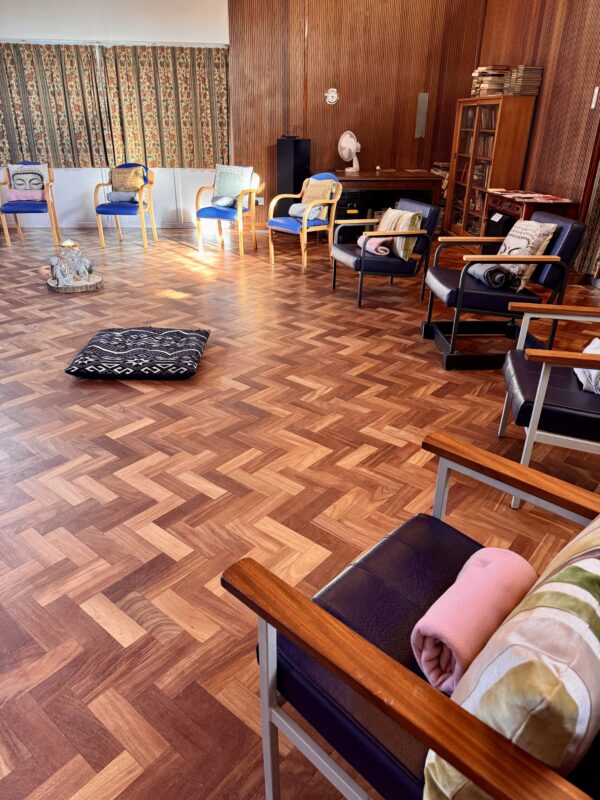
Meditation & Mindfulness Made Easy: Relax, Feel Better, & Enjoy Life More
Join our friendly in-person community or explore our meditation and mindfulness online courses and coaching programs designed to help you reduce stress, sleep better, and feel like yourself again.
Love this blog? Get even more bite-sized calm!
I share daily mindfulness & meditation tips on TikTok, Instagram, Facebook, and You Tube — practical tools you can use in under a minute to feel calmer, sleep better, and protect your peace.
Follow me here…